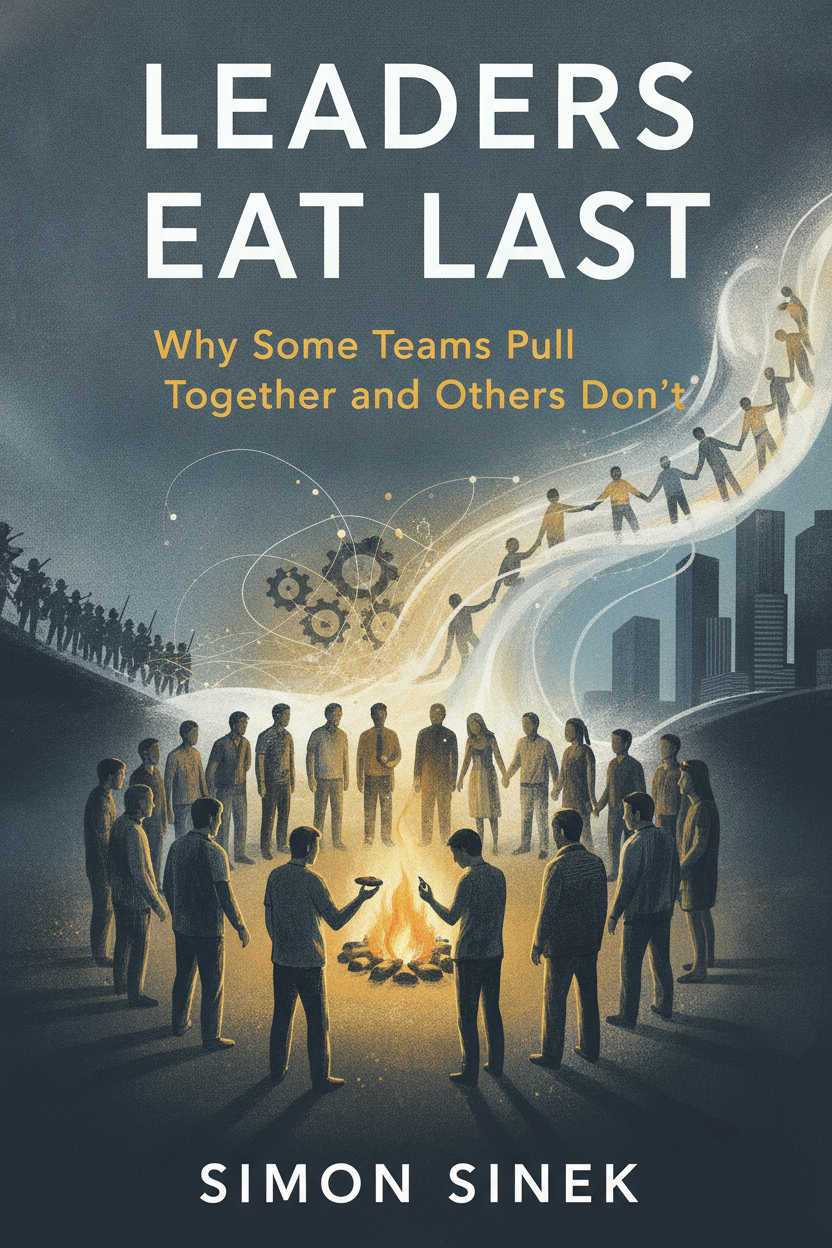
Leaders Eat Last: Why Some Teams Pull Together and Others Don't

Leaders Eat Last: Why Some Teams Pull Together and Others Don't

by Simon Sinek
4.6
Rating
46
Minutes
27
Chapters

What's it about

In *Leaders Eat Last: Why Some Teams Pull Together and Others Don't* by Simon Sinek, the author delves into the foundational elements that foster effective leadership and cohesive teams. Drawing on examples from history, business, and military training, Sinek emphasizes the importance of empathy, trust, and a sense of belonging to create supportive and innovative work environments. The book explores the role of natural human instincts in survival and cooperation, contrasting them with the challenges posed by modern organizational practices that often prioritize metrics over human connections. Through exploring the pitfalls of abstraction and the significance of integrity and communal goals, Sinek advocates for leadership that serves and protects its members, building a culture of trust and resilience. By sharing lessons from evolution, corporate transformations, and societal changes, the book underscores the value of leading with empathy to achieve lasting success.

27 chapters in this title

1
PART 1: OUR NEED TO FEEL SAFE
Empathy is highlighted as a critical component of effective leadership and organizational success, creating a culture of sacrifice and service. By providing support and protection across all levels, organizations foster strong bonds and enable extraordinary efforts from their members.
2
2. Employees Are People Too
Bob Chapman transformed HayssenSandiacre by emphasizing empathy and trust, changing a rigid work environment into a caring community. By valuing employees as individuals and eliminating restrictive practices, the company culture shifted, fostering cooperation and pride.
3
3. Belonging
The concept of belonging transforms individuals from self-reliant entities into cohesive units within an organization. This transformation is exemplified by the training of U.S. Marines, who develop a strong sense of trust and responsibility for each other, fostering a resilient Circle of Safety. This secure environment encourages collaboration and innovation by reducing internal threats, allowing the group to focus on external challenges.
4
4. Yeah, but . . .
Ken is a middle-ranking executive who feels stuck in a job he doesn't love due to responsibilities. The narrative explores the gap between the ideal work environment and the harsh realities faced by employees, highlighting the impact of poor leadership on stress and health. The emphasis is on the importance of creating supportive work environments that prioritize employee well-being, as failure to do so can harm both individuals and businesses.
5
PART 2: POWERFUL FORCES
Fifty thousand years ago, early humans survived dangerous environments through cooperation and social bonds, despite lacking modern advancements. Their survival was driven by natural instincts to work together, forming communities of trust to navigate external threats.
6
6. E.D.S.O.
E.D.S.O. explores the essential roles of endorphins and dopamine in driving human behavior, emphasizing their influence on survival and achievement. Endorphins mask physical pain, while dopamine provides a sense of satisfaction upon goal completion. The chapter also introduces serotonin and oxytocin as chemicals promoting social bonds and trust, crucial for societal cohesion.
7
7. The Big C
Stress and anxiety are innate survival mechanisms that alert individuals to potential threats, mediated by cortisol, the so-called 'stress hormone.' While these reactions were critical for survival in ancient times, in modern workplaces they often lead to chronic stress when trust and safety are lacking. Cultivating environments of trust and cooperation, where employees feel secure and supported, can significantly reduce stress, enhance cooperation, and improve overall health and organizational performance.
8
8. Why We Have Leaders
Humans have leaders due to our evolutionary need for structure and survival. Hierarchies allow us to avoid chaos by designating roles and responsibilities, ensuring cooperation and successful group functioning. Leadership isn't just about rank; it's about choosing to serve and protect others, earning loyalty and trust through self-sacrifice and responsibility.
9
PART 3: REALITY
Trust plays a crucial role in determining when to follow or break rules in critical situations. It is not enough to rely solely on rules or technology; human judgment and trust must guide decisions, especially during emergencies. True leadership involves empowering individuals to act in the best interest of others, even if it means bending the rules.
10
10. Snowmobile in the Desert
Humans possess a unique ability to invent and build due to the neocortex of our brain, which enables rational and critical thinking. However, genuine achievement comes from our capacity to cooperate and build strong communities, facilitated by the limbic brain and its influence on emotions, trust, and social bonds. Despite these capabilities, modern advancements have created environments that hinder cooperation, causing stress and isolation.
11
PART 4: HOW WE GOT HERE
The chapter explores the economic boom of the 1920s in America, highlighting how consumerism, technological advancements, and media proliferation fostered a period of unprecedented growth. It then examines the subsequent collapse that led to the Great Depression, reshaping societal values and setting the stage for America's involvement in World War II, which further defined the spirit and sacrifice of the Greatest Generation.
12
12. The Boomers All Grown Up
The 1980s marked a period of substantial economic growth and technological advancement, exemplified by the rise of personal computers and disposable products. The era also witnessed a shift in business practices, where mass layoffs became an accepted strategy to counter economic disruptions. This shift prioritized protecting commerce over people, affecting trust and cooperation in workplaces and society at large.
13
PART 5: THE ABSTRACT CHALLENGE
The concept of abstraction in human behavior can lead to detrimental and inhumane actions. When individuals are distanced from the consequences of their actions, they can commit acts that go against their moral code, as demonstrated by both historical events and scientific experiments.
14
14. Modern Abstraction
Modern abstraction in business leads to decisions where metrics outweigh human impact. This detachment can result in unethical practices, as demonstrated by historical and contemporary examples like the Peanut Corporation of America and Apple's tax strategies. A reliance solely on legal compliance neglects moral responsibility, undermining trust and accountability.
15
15. Managing the Abstraction
This chapter explores the complexities of understanding and managing abstractions in human relationships and organizational dynamics. It discusses how numbers can depersonalize human tragedy, the limitations of virtual connections compared to face-to-face interactions, and the significance of understanding those we help. It emphasizes the importance of time, energy, and patience in building trust and effective leadership.
16
16. Imbalance
As humans transitioned from a subsistence to a surplus economy, societies began to face challenges arising from excess resources. This shift enabled population growth, trade, and the emergence of social classes, but also led to imbalances as the powerful started manipulating systems for personal gain. This imbalance, termed "Destructive Abundance," occurs when personal gain overtakes communal good, leading to degraded organizational cultures.
17
PART 6: DESTRUCTIVE ABUNDANCE
The chapter examines how corporate culture deeply influences a company's trajectory, using Goldman Sachs as a cautionary tale. It contrasts the firm's early success through strong cultural values with its decline after culture was sacrificed for short-term gains. Additionally, it highlights how a supportive culture can drive innovation and resilience, as demonstrated by companies like 3M.
18
18. Leadership Lesson 2: So Goes the Leader, so Goes the Culture
Leadership sets the cultural tone of an organization. Authoritarian leaders who prioritize control and personal gain over genuine connection can foster an environment of mistrust and internal conflict. In contrast, leaders who empower their teams can cultivate trust and cooperation, leading to sustained success and innovation.
19
19. Leadership Lesson 3: Integrity Matters
Integrity is fundamental to effective leadership and trust-building. In the Marines and successful organizations, honesty and accountability define true leaders. Integrity ensures reliance and safety, fostering a strong, cohesive culture. Leaders must prioritize truthfulness, building trust through consistent and transparent communication.
20
20. Leadership Lesson 4: Friends Matter
The effectiveness of Congress has declined due to a lack of cooperation and the prioritization of party control over friendship and collective purpose. Historically, bipartisan friendships facilitated legislative progress, but current trends towards partisanship and remote work have eroded these essential bonds, leaving Congress polarized and less productive.
21
21. Leadership Lesson 5: Lead the People, Not the Numbers
The shift from shareholder value to people-first leadership illustrates the pitfalls of prioritizing short-term gains over long-term sustainability. This approach has led to detrimental corporate practices such as layoffs to meet financial goals, often compromising company culture and employee morale.
22
PART 7: A SOCIETY OF ADDICTS
The chapter explores how both historical and modern institutions inadvertently contribute to widespread issues by failing to recognize their role in the problems. It draws parallels between the spread of puerperal fever in the 19th century and modern corporate culture, where systems prioritize efficiency over human connections. Additionally, it examines how dopamine-driven incentives in business lead to detrimental behavior similar to addictive substances.
23
23. At Any Expense
The balance between regulation and commerce has been a constant challenge, impacting industries from oil drilling to broadcast media. Originally, regulations like the Radio Act of 1927 established a system intended to serve the public good through balanced journalism. However, shifts in priorities, particularly in the 1980s, turned news into a profit-driven industry, undermining its foundational commitments to the public. This change mirrors similar deregulation in banking with the repeal of the Glass-Steagall Act, leading to significant economic volatility.
24
24. The Abstract Generation
The chapter explores how generational shifts in values and technology have led to a society characterized by impatience and abstraction. It examines the cultural impacts of parenting approaches from the Greatest Generation to Millennials, highlighting how philosophies geared towards abundance and skepticism have evolved into behaviors that prioritize instant gratification and digital engagement over deep, meaningful connections.
25
PART 8: BECOMING A LEADER
The path to true leadership lies in overcoming our internal organizational dangers rather than external threats. By embracing the principles of support and service found in Alcoholics Anonymous, we can transform toxic cultures into circles of trust and safety. This fosters a healthier environment where lasting relationships and shared responsibilities flourish, effectively countering addiction to performance metrics.
26
26. Shared Struggle
In modern society, abundance undermines our sense of value and community. While waste prevails in developed countries due to excess, the shared struggle faced by those in need fosters cooperation, camaraderie, and innovation. Meaningful progress is driven by purposeful leadership, which inspires individuals to connect and strive beyond mere survival.
27
27. We Need More Leaders
True leadership requires empathy and a continuous commitment to improving the well-being of those under one's care. It demands effort, time, and the willingness to challenge the status quo for sustainable success. Leaders must focus on gradual, meaningful changes rather than quick fixes.

Readers also enjoyed